
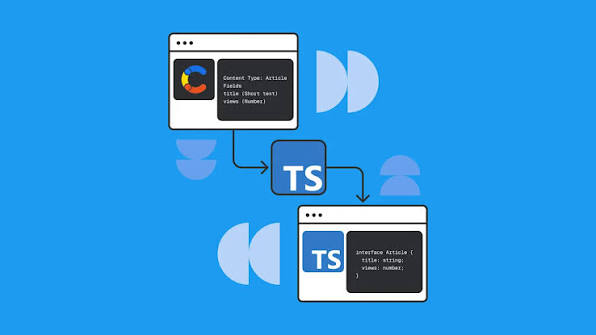
The promise of going headless was never about a prettier admin panel. It was about decoupling. You model content once in Contentful, expose it through an API, and let any front end consume it: a Next.js storefront, a native mobile app, an in-store kiosk, a smart display in a lobby, a voice surface you haven’t shipped yet. The content layer stays clean and authoritative while the presentation layer multiplies. That is the whole point of a composable stack.
So here is a question worth sitting with: if your content already travels across every surface your team can dream up, why does customer support so often stay welded to a single website widget?
The Mismatch Between Composable Content and Bolted-On Support
Most help tooling assumes a monolith. It expects one site, one theme, one place to drop a script tag and call it done. That assumption quietly contradicts everything a Contentful team has built. You spent the effort to make content portable, queryable, and channel-agnostic, and then the answers about that content live in a separate silo that only one channel can reach.
The deeper problem is the source of truth. When support knowledge lives in a disconnected help desk, it drifts. A product detail changes in your content model, the API serves the new value instantly to every front end, and the canned support macro keeps repeating last quarter’s spec. Now your decoupled architecture has a coupling you never wanted: a stale answer hard-wired to a tool that nobody updates.
Content as the Brain, Not Just the Body
A more honest design treats your published content as the substance an assistant reasons from. Instead of maintaining a parallel knowledge base by hand, the assistant draws on the same material your delivery API already serves. The entries, the rich text, the reference fields, the structured product and documentation models you curated in Contentful become the ground the assistant stands on.
That keeps the single-source-of-truth discipline intact. When an editor updates an entry and it propagates through your pipeline, the assistant’s understanding moves with it. There is no second copy to reconcile, no macro library to babysit. The content team does what it already does, and support quality follows automatically because it is reading from the same well.
It is worth being precise about what is happening here, because the distinction matters for how you reason about correctness. The assistant is not trained on your content and then frozen; it answers using what your delivery layer is publishing at the moment a visitor asks. That is the same contract your front ends already operate under. A page component does not memorize a product description at build time and hope it still holds; it requests the current entry and renders what comes back. An assistant that reads from your published content inherits that property for free. The freshness guarantee you engineered into your delivery pipeline extends to the conversation layer without any new machinery.
Meeting Visitors Where the Front End Renders
Because the assistant is fed by content rather than welded to a layout, it can surface anywhere your delivery layer reaches. The same published material that answers a question on your marketing site can answer it inside the documentation portal, the customer dashboard, or the regional microsite your team spun up last sprint. One body of knowledge, many points of contact, which is exactly the shape of a headless deployment.
For teams who value clean boundaries, this matters. A content-driven assistant fits the decoupled mindset rather than fighting it. If you want it embedded across the surfaces your Contentful project powers, the natural starting point is a setup like Asyntai’s content-aware chatbot built for Contentful front ends, which reads from your published material instead of a separate ticketing database. The integration stays thin, the knowledge stays centralized, and the presentation stays yours to control.
One Question, Three Surfaces
Make it concrete. Suppose you model a return policy as a single entry in Contentful, referenced by a dozen product types. A shopper on the Next.js storefront asks whether a recently purchased item qualifies for an extended holiday return window. The assistant reads the current policy entry and answers in line with what the product pages are already rendering, because both are pulling from the same field.
The next morning the same person opens your mobile app and asks again, phrased differently. They are on a separate front end, built by a separate team, talking to the same delivery API. The answer is consistent because the source is identical, not because someone copied a macro into a second tool. Later, a customer at an in-store kiosk poses the same question to the display embedded in that surface. Three channels, one entry, no divergence. Then your content team shortens the window for a new season. They edit one entry. Every surface, including each assistant, reflects the change on the next request. Nobody touches a help-desk article, and nothing contradicts the live pages.
Contrast that with the bolted-on alternative. Three widgets, three knowledge bases, three places a well-meaning agent has to remember to update, and a near-certainty that one of them will quietly fall out of step. The composable approach removes the failure mode rather than asking a process to compensate for it.
What This Looks Like in Practice
Concretely, a content engineering team gets a few things that align with how they already work:
- One knowledge surface that updates as entries update, so support never contradicts what the API is serving right now.
- A presentation layer you still own, since the assistant slots into whatever framework renders your front end.
- Channel reach that mirrors your delivery reach, instead of a widget stranded on a single domain.
- No duplicate content model to maintain, which keeps the source of truth genuinely singular.
- Answers that respect your structure, since the assistant reads the same entries, references, and rich-text fields your editors already govern.
The Architectural Fit
It is worth seeing how a chat assistant that reads your Contentful entries fits a headless setup: it pulls from your published content centrally and answers at every front end.
There is also an operational dividend that engineering leads tend to appreciate. Governance stays in one place. The roles, workflows, and review steps you set up around your content model already decide what is publishable and what is not. An assistant reading from published entries inherits those guardrails instead of introducing a parallel approval process in some support console. You audit one pipeline, not two. When something needs to change, you change the entry and the change is the deployment.
If you went composable to stop repeating yourself across channels, support is the last place that should force you back into repetition. Let the content you already publish do double duty. The teams that get the most from a headless stack are the ones who notice when a piece of tooling honors the architecture instead of ignoring it, and they extend that standard to every layer, including the conversation a visitor has when they need an answer. Your content already speaks to every surface. The help around it can do the same.