
From Midtown Towers to Downtown Campuses — Mapping the Island’s Commercial Geography
Every city has its business districts. Manhattan has business corridors — strips of commercial density so concentrated that a single block can house more economic activity than some entire towns. Understanding these corridors — where they run, what defines them, and how they are evolving — is essential for anyone who does business on the island.
This is not a simple story of skyscrapers and stock exchanges. Manhattan’s commercial geography is a layered, evolving ecosystem shaped by transit infrastructure, real estate economics, demographic shifts, and the persistent gravitational pull of proximity. In Manhattan, being near other businesses is not just convenient — it is strategically essential. The network effects of clustering create value that individual companies could never generate alone.
For a real-time view of how these corridors are populated, a dynamic Manhattan business directory provides the granular data that maps, anecdotes, and real estate listings cannot. Let us trace the primary corridors and understand what makes each one tick.
Midtown Manhattan: The Corporate Power Axis

The Midtown corporate corridor is not a single street — it is a matrix of interconnected commercial zones that together form the most economically productive neighborhood in the world. The primary axes run north-south along Park Avenue, Madison Avenue, Fifth Avenue, and Sixth Avenue (Avenue of the Americas), with secondary commercial strips connecting them along 42nd, 47th, 50th, and 57th Streets.
The Plaza District — roughly bounded by 42nd and 59th Streets, from Fifth Avenue to Park Avenue — commands the highest commercial rents in New York and among the highest globally. Class A office space here regularly exceeds $100 per square foot, with trophy buildings achieving significantly more. The tenants are, predictably, the largest and most profitable companies in the world: investment banks, hedge funds, major law firms, and global management consultancies.
For businesses looking to establish or expand their Midtown presence, understanding the full landscape of corporate offices in Midtown Manhattan is critical. The directory reveals not just the major players but the supporting ecosystem — the technology vendors, the staffing agencies, the corporate caterers, and the shared workspace providers that service the corridor’s primary tenants.
The Hotel Corridor
Running parallel to the corporate axis is Midtown’s hospitality corridor, which is equally significant commercially. The stretch from 42nd to 57th Streets, centered on the area between Broadway and Lexington Avenue, contains more hotel rooms per block than almost any comparable area in the world. This is not coincidental — the hotels exist because the businesses exist, and the businesses benefit from the hotels’ ability to host the clients, partners, and recruits who fly in from around the world.
The hotels concentrated in Midtown range from iconic luxury properties to efficient business-focused accommodations. The economic relationship between these hotels and the surrounding corporate offices is symbiotic: the hotels capture revenue from business travelers, while the offices benefit from having clients and partners housed within walking distance of meetings, presentations, and deal closings.
Midtown’s Evolving Identity
Midtown’s identity as a corporate monoculture is slowly diversifying. The development of Hudson Yards brought a new commercial sub-district to the Far West Side, attracting technology companies, media firms, and creative agencies that might previously have located Downtown or in Brooklyn. The Penn Station area is undergoing a massive transformation that will eventually create a more modern, amenity-rich transit hub surrounded by commercial and residential towers.
Midtown’s dominance is not guaranteed — it must be continually earned through reinvestment and adaptation. The corridors that thrive will be those that evolve to meet the needs of 21st-century businesses, not those that rest on 20th-century infrastructure.
Downtown Manhattan: The Corporate Campus Revolution
Downtown Manhattan’s commercial evolution has been one of the most dramatic urban transformations of the 21st century. What was once a district that emptied out at 6 PM — a mono-functional financial zone dominated by banks, brokerages, and insurance companies — has become a multi-dimensional business ecosystem that attracts a far more diverse range of industries and operates on a 24-hour cycle.
The concept of the corporate campus — typically associated with suburban tech parks in Silicon Valley — has found an unlikely home in Lower Manhattan. The World Trade Center complex, with its interconnected towers, underground retail concourse, transit hub, and memorial campus, functions as an urban corporate campus that combines commercial, cultural, and memorial functions in a single integrated space.
Major tenants in the WTC complex include Condé Nast, Moody’s, and GroupM, among others. Their presence has attracted a supporting ecosystem of smaller companies — media production firms, financial technology startups, consulting practices — that want the prestige and connectivity of a WTC address without the overhead of occupying an entire floor.
For a detailed view of the companies operating in this evolving landscape, the listing of corporate campuses and major commercial centers in Downtown Manhattan provides valuable intelligence for businesses considering a Downtown location.
The Financial District’s Second Life
The broader Financial District — the narrow streets south of the WTC complex, centered on Wall Street and Broad Street — is experiencing a residential and cultural renaissance that is fundamentally changing its commercial character. Conversion of older office buildings into residential apartments has brought thousands of new residents to the area, creating demand for retail, dining, and services that did not exist a generation ago.
This residential influx has, in turn, attracted new categories of businesses to the area: boutique fitness studios, artisan food shops, coworking spaces, and creative agencies that prefer the cobblestone streets and waterfront proximity of Lower Manhattan to the steel-and-glass canyons of Midtown. The result is a commercial ecosystem that is more diverse, more resilient, and more interesting than the Financial District of the 1990s.
The Technology Influx
Downtown Manhattan has become an increasingly popular location for technology companies, attracted by a combination of lower rents than Midtown, modern office infrastructure, and proximity to Brooklyn’s tech scene. The Flatiron District and NoMad, technically at the boundary between Midtown and Downtown, have emerged as the city’s primary startup corridor, with venture capital firms, tech incubators, and early-stage companies concentrated within a few blocks.
The migration of tech companies to Downtown has created a talent feedback loop: as more tech companies establish Downtown offices, more tech workers choose to live in the area, which in turn attracts more tech companies seeking proximity to the talent pool. This dynamic has been particularly pronounced in the FiDi (Financial District) and Tribeca sub-markets.
Downtown Manhattan’s transformation from a nine-to-five financial district to a twenty-four-hour mixed-use neighborhood is one of the most successful urban reinvention stories of the modern era.
The Coffee Connection: Midtown and Downtown
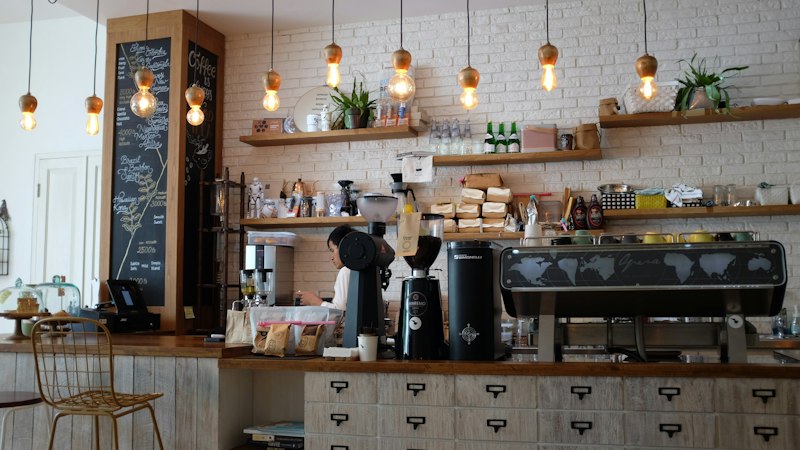
No discussion of Manhattan’s business corridors is complete without acknowledging the role of the coffee shop as commercial infrastructure. In both Midtown and Downtown, independent coffee shops serve as informal meeting rooms, remote offices, and networking venues that facilitate business activity far beyond their own revenue.
In Midtown, coffee shops clustered around Grand Central Terminal and Penn Station serve as early-morning meeting points for professionals who prefer a neutral venue to a formal office. In Downtown, the coffee shops of the Financial District and Tribeca have become essential community anchors for the area’s growing residential and startup populations.
The Midtown coffee scene, accessible through the directory of Midtown coffee shops, reflects the neighborhood’s corporate character — efficient service, premium quality, and environments designed for both quick grab-and-go orders and extended business conversations. The best Midtown coffee shops understand their clientele and design their spaces accordingly: communal tables for freelancers, quiet corners for phone calls, and bar seating for those watching the street while they caffeinate.
The nonprofit organizations based in Midtown are among the heaviest users of coffee shop meeting space, often lacking the dedicated conference rooms that corporate offices take for granted. A well-located coffee shop can serve as the unofficial headquarters of a small nonprofit, providing the professional meeting environment that the organization’s budget cannot afford to maintain on its own.
The Corridor Map: How It All Connects
Manhattan’s business corridors are not isolated silos — they are interconnected networks linked by the island’s transit system, its pedestrian infrastructure, and the professional relationships that span geographic boundaries. A financial analyst in Midtown might meet with a tech startup founder in Downtown over coffee, then walk to a nonprofit board meeting nearby, all within the span of a single afternoon.
This interconnectedness is Manhattan’s greatest competitive advantage. The density of diverse businesses — corporate offices, hotels, coffee shops, nonprofit organizations, and the supporting services they all require — creates a self-reinforcing ecosystem that generates value for every participant. Companies locate in Manhattan not just because of the prestige or the transit access, but because of the network effects that come from being surrounded by complementary businesses.
For businesses evaluating Manhattan locations, the comprehensive business directory provides the data needed to understand these network effects and make informed decisions. Whether you are a corporation seeking a Midtown headquarters, a hospitality brand looking at hotel opportunities, a tech company evaluating Downtown campuses, or a coffee entrepreneur scouting café locations, the map of Manhattan’s business corridors holds the answers you need.
The corridors will continue to evolve. New transit projects, rezoning initiatives, and commercial development will reshape the map in ways that are difficult to predict. But the underlying logic of Manhattan’s business geography — density, diversity, and proximity — is unlikely to change. These are the forces that have shaped the island’s commercial character for over a century, and they will continue to define it for the century ahead.
Choosing the Right Corridor for the Job
A business corridor should be judged by the job it needs to perform. A headquarters team may need transit access, conference space, hotels, and a strong lunch network. A hospitality brand may prioritize tourist flow, visibility, and proximity to cultural destinations. A startup may care more about flexible leases, technical talent, and nearby meeting spots than about a prestige address. Manhattan has room for all of these models, but they do not belong in the same exact blocks.
Midtown remains the strongest choice for organizations that depend on regional access. Grand Central, Penn Station, and multiple subway lines make it easier for clients, staff, and vendors to arrive from different parts of the city and suburbs. Downtown is often better for companies that want a more modern mixed-use environment, especially when residential growth, waterfront development, and creative office space matter as much as tradition.
The most successful location decisions come from matching the corridor to the work pattern. If the team meets clients every day, visibility and transit may matter most. If the team works quietly and needs room to grow, flexible office stock may matter more. If the business depends on visitors, nearby hotels and restaurants become part of the operating plan. Manhattan’s corridors are expensive, so the right decision is the one that turns location into daily advantage.
Questions to Ask Before Committing to a Manhattan Location
Before choosing a corridor, a business should ask how the location will serve staff, clients, vendors, and daily operations. Is the office easy to reach during peak commute hours? Are there nearby hotels for visiting partners? Can the surrounding food, coffee, banking, and professional services support a full workday? Does the area still feel active after 6 PM, or does it depend almost entirely on weekday traffic?
These questions are practical, but they shape long-term value. A slightly less prestigious address may perform better if it reduces commute friction, improves hiring, and gives clients a smoother visit. A more expensive location may be justified if it creates visibility and trust that directly support revenue. In Manhattan, the best corridor is not always the most famous one; it is the one whose daily pattern matches the business model.
Final Location Check
Before making a final decision, businesses should walk the corridor at different times of day. Morning commute, lunch hour, early evening, and weekend activity can reveal different strengths and weaknesses. A location that looks perfect at noon may feel quiet after work, while another block may become more useful once hotels, restaurants, transit, and service businesses are considered together. This final street-level check helps turn data into a real operating decision.