
Introduction
Technology continues to transform the way people communicate, work, exercise, and manage their daily lives. Among the most exciting developments is wearable technology, which has evolved from simple fitness trackers into advanced devices capable of monitoring health, supporting productivity, and providing personalized digital experiences. Smartwatches, fitness bands, smart rings, augmented reality glasses, and intelligent clothing are becoming increasingly popular as consumers look for convenient ways to connect technology with everyday activities.
The future of wearable tech promises even more significant changes. Artificial intelligence, advanced health sensors, flexible electronics, and improved battery technology are expected to make wearable devices more useful, comfortable, and personalized. These innovations may help people understand their health patterns, improve fitness routines, and interact with digital services without constantly reaching for their smartphones.
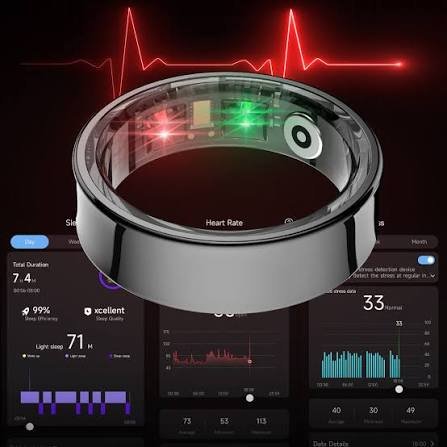
Another important trend is the growing demand for affordable wearable devices. Consumers increasingly want useful features without paying premium prices. Products such as a budget smart ring with heart rate tracking demonstrate how compact technology can provide convenient access to selected health and fitness features. The colmi r09 smart ring is an example of the type of affordable wearable product attracting interest from people who prefer a smaller alternative to traditional smartwatches.
As wearable technology continues to advance, several innovations are worth watching in the coming years.
The Evolution of Wearable Technology
Wearable technology has developed significantly over the past decade. Early devices primarily counted steps, estimated calories burned, and displayed basic notifications. Modern wearables can measure several health-related indicators, track sleep patterns, monitor exercise sessions, and provide insights through connected mobile applications.
Smartwatches have helped popularize wearable technology by combining communication, fitness tracking, and convenient access to smartphone functions. Fitness bands have attracted users who prefer lightweight designs and straightforward health monitoring. Smart rings have introduced another option for people who want discreet devices that fit naturally into their daily routines.
This evolution reflects a broader change in consumer expectations. People no longer want technology that simply records information. They increasingly expect devices to interpret collected data, identify meaningful patterns, and provide practical recommendations.
Future wearables will likely become more intelligent, interconnected, and responsive to individual needs. Instead of presenting large amounts of raw information, they may focus on understandable insights that help users make better everyday decisions.
Artificial Intelligence Will Transform Wearable Devices
Personalized Health and Fitness Insights
Artificial intelligence is expected to become one of the most influential technologies in wearable development. By analyzing information collected over time, AI-powered systems can identify patterns and provide personalized feedback based on individual activity levels, sleep habits, and other measurements.
For example, a fitness wearable may compare activity patterns across several weeks and suggest adjustments to a person’s exercise schedule. A sleep-tracking device could highlight changes in sleep duration and help users recognize habits associated with better rest.
These recommendations will become more useful as algorithms improve and devices collect more consistent data. However, the accuracy of any insight depends on sensor quality, the information available, and the limitations of the software.
AI-powered wearables should support informed lifestyle decisions rather than replace professional medical assessment. Users should also have clear information about how their data is processed and whether it is shared with third parties.
Smarter Notifications and Digital Assistance
Artificial intelligence may also improve the way wearables communicate with users. Instead of displaying every notification, future devices could prioritize information according to context and personal preferences.
A smartwatch might highlight an important appointment while reducing less relevant alerts during exercise. Smart glasses could provide navigation information when needed, while voice assistants could help users manage reminders without touching a screen.
These capabilities could make wearable technology less distracting and more convenient. The objective is not simply to add more features but to make existing functions easier to use.
Smart Rings Will Become More Popular
Compact Designs With Practical Features
Smart rings are an important development in wearable technology because they provide selected digital functions in a small, lightweight format. Unlike smartwatches, which rely on wrist-mounted displays, smart rings usually collect information through built-in sensors and present results through a connected smartphone application.
Their compact design makes them attractive to people who prefer discreet technology. Depending on the model, features may include activity tracking, sleep monitoring, heart rate measurements, and other wellness-related functions.
As sensors become smaller and more efficient, future smart rings may offer improved comfort and longer operating times. Manufacturers will also continue exploring better materials, water resistance, and designs suitable for different everyday activities.
Affordable Smart Rings for Everyday Users
Affordability will play a major role in the adoption of wearable technology. Although premium devices may provide extensive software features, many consumers only need basic activity monitoring and convenient access to selected health metrics.
A budget smart ring with heart rate tracking can appeal to users who want to explore wearable technology without making a large investment. The colmi r09 smart ring is one product consumers may investigate when comparing compact wearable options in the budget category.
Before purchasing any smart ring, buyers should review its supported features, smartphone compatibility, battery performance, sizing requirements, and application experience. They should also check whether the device provides continuous heart rate measurements or only takes readings at certain intervals.
It is equally important to distinguish between general wellness tracking and medical-grade monitoring. A consumer smart ring can help users observe trends, but its readings should not automatically be treated as a diagnosis or a substitute for clinical equipment.
Better Integration With Smartphones
Future smart rings may become more closely integrated with smartphones and other connected devices. Users could receive discreet alerts, control selected phone functions, or synchronize activity information across compatible applications.
The precise functions will depend on the product and its software ecosystem. Nevertheless, the growing popularity of compact wearables suggests that consumers value devices that offer useful capabilities without requiring a large screen.
Advanced Health Monitoring Will Continue to Develop
More Sophisticated Sensors
Health monitoring is one of the strongest drivers of wearable innovation. Researchers and manufacturers continue working on sensors that can collect useful physiological information in smaller and more energy-efficient devices.
Heart rate sensors are already common in many smartwatches, fitness bands, and selected smart rings. Future improvements may increase measurement consistency during different activities and under changing environmental conditions.
Other developing technologies include sensors designed to estimate blood oxygen saturation, monitor skin temperature, and collect additional physiological signals. Some experimental systems are also exploring ways to measure glucose-related information without conventional blood sampling, although reliable noninvasive glucose monitoring remains a significant technical challenge.
The availability of these functions will vary between devices. Consumers should avoid assuming that every wearable can measure every health indicator.
Early Awareness of Health Changes
Wearables may become increasingly useful for identifying changes in personal health patterns. For example, a device might detect that a user’s resting heart rate has remained different from their usual range for several days.
Such changes can have many explanations, including physical activity, stress, sleep disruption, illness, or measurement error. Future software may provide more context to help users understand when a pattern deserves attention.
However, wearable alerts are not definitive evidence of a medical condition. Their greatest value may lie in encouraging people to notice persistent changes and discuss relevant concerns with qualified healthcare professionals.
Remote Healthcare and Connected Monitoring
Healthcare providers are also exploring remote monitoring technologies that allow selected patient measurements to be reviewed outside traditional clinical settings.
In suitable situations, connected wearables may help clinicians follow activity, heart rate, sleep, or other relevant measurements between appointments. This approach could support ongoing care for certain patients and reduce the need for some routine in-person measurements.
Successful implementation will require reliable devices, secure data transmission, clear consent procedures, and systems that help healthcare professionals interpret information appropriately.
Augmented Reality and Smart Glasses
Digital Information in the User’s Field of View
Smart glasses are expected to become more capable as display technology, cameras, processing systems, and batteries improve. Some devices already support notifications, photography, voice interactions, and hands-free assistance.
Future models may offer more sophisticated augmented reality experiences. Digital directions could appear over real-world surroundings, while workplace applications might display instructions alongside physical equipment.
These features could be valuable for navigation, education, maintenance, tourism, and professional training. For example, a technician might receive step-by-step guidance while inspecting a machine without repeatedly consulting a separate screen.
However, widespread adoption will depend on comfort, cost, battery life, display quality, and social acceptance.
Privacy and Responsible Design
Smart glasses can collect information about both their users and nearby people. Cameras, microphones, and AI-powered recognition systems create important privacy considerations.
Manufacturers will need to communicate clearly when recording is active and provide meaningful controls over stored information. Regulations and responsible product design will also influence how these devices are used in public and professional environments.
The future of smart glasses will depend not only on technical performance but also on whether people feel comfortable using them around others.
Flexible Electronics and Smart Clothing
Wearables That Adapt to the Human Body
Flexible electronics could expand wearable technology beyond rings, watches, and glasses. Researchers are developing electronic materials that can bend, stretch, or fit into fabrics while retaining useful functionality.
Smart clothing may eventually integrate sensors into shirts, athletic garments, and other everyday items. Depending on the design, these systems could track movement, estimate breathing patterns, or collect information relevant to sports training and rehabilitation.
Unlike traditional wrist-worn devices, clothing-based sensors may measure certain movements from different parts of the body. This could make them useful for applications that require more detailed movement analysis.
Applications in Sports and Fitness
Athletes and fitness enthusiasts may benefit from wearable clothing that provides information about posture, movement, and training intensity. Such feedback could help users refine technique and understand how their bodies respond to different exercises.
Rehabilitation specialists may also find value in systems that monitor selected movements during recovery programs.
For these applications to become practical, smart clothing must remain comfortable, durable, washable, and reasonably priced. Reliable connectivity and simple data interpretation will be equally important.
Improved Battery Life and Energy Efficiency
Battery performance remains a major challenge for wearable technology. Smaller devices have limited physical space for batteries, while advanced sensors, displays, and wireless connections can increase energy consumption.
Future innovations may improve battery chemistry, power management, and component efficiency. Devices may also use low-power processors that perform routine tasks without activating more energy-intensive systems.
Smart rings could particularly benefit from these improvements because their small size limits battery capacity. More efficient sensors and optimized software could help future models operate longer between charges.
Researchers are also investigating energy harvesting methods that capture small amounts of energy from movement, light, or temperature differences. Although these technologies have potential, their practical contribution will depend on the energy required by the device and the conditions in which it operates.
Wireless charging and improved charging accessories may also make wearable devices easier to maintain. Ultimately, users will expect longer operating times without sacrificing important features.
Wearables Will Become More Connected
Integration Across Digital Devices
The future of wearable technology will involve stronger connections between smartphones, home devices, vehicles, workplace systems, and health applications.
A wearable might communicate with a compatible smart home system to manage selected settings or connect with a phone to coordinate navigation and notifications. In professional environments, connected devices could help workers access information while keeping their hands available for other tasks.
Interoperability will be essential. Consumers benefit when products work smoothly across different platforms instead of forcing them to rely on isolated applications.
Manufacturers may need to adopt more consistent standards and improve compatibility to make these experiences easier to manage.
The Growth of Context-Aware Technology
Context-aware wearables use information such as activity, location permissions, device settings, and interaction history to adapt their behavior.
For example, a wearable might simplify notifications during a workout or prioritize navigation when the user is traveling. Future systems could become more effective at understanding which features are useful at a particular moment.
However, context-aware technology must give users control over data collection and personalization. Convenience should not come at the expense of privacy or autonomy.
Data Privacy and Cybersecurity Will Matter More
As wearable devices collect increasing amounts of personal information, privacy and security will become central concerns.
Health-related measurements, movement records, and location information can reveal details about daily routines. If such information is poorly protected, users may face unwanted exposure or misuse of their data.
Manufacturers should use appropriate security measures, explain their privacy policies in understandable language, and provide controls for reviewing or deleting stored information.
Consumers can also take practical steps to protect themselves. They should use strong account passwords, enable available security features, install software updates, and review application permissions regularly.
When comparing wearable devices, buyers should evaluate the software ecosystem as carefully as the hardware. A comfortable design and impressive sensor list are less valuable if the accompanying application handles personal information irresponsibly.
The Growing Importance of Affordable Wearable Technology
Making Useful Features Accessible
The wearable market will likely continue serving consumers with different budgets and priorities. Premium devices may offer advanced displays, extensive applications, and specialized monitoring capabilities, while affordable models focus on essential functions.
Budget wearables can introduce more people to activity tracking and basic wellness monitoring. For consumers who do not need a large display, a compact ring or simple fitness band may be a practical choice.
A product such as the colmi r09 smart ring can be considered within this broader movement toward smaller and potentially more accessible wearable devices. Buyers should verify current specifications and independent reviews before deciding whether a particular model meets their needs.
Choosing Features Instead of Paying for Extras
The best wearable is not necessarily the most expensive one. It is the device that offers useful features, dependable performance, and a comfortable experience at a price that fits the buyer’s budget.
Before purchasing, consumers should identify their main priorities. Someone interested in daily activity and heart rate trends may need different features from a runner who wants detailed training metrics or a professional who needs hands-free communication.
Battery life, application reliability, compatibility, warranty coverage, and data privacy should all influence the decision.
Affordable products can be valuable when their capabilities are clearly explained and their limitations are understood.
Challenges Facing the Future of Wearable Tech
Despite promising developments, wearable technology still faces several challenges.
First, sensor accuracy can vary depending on device placement, movement, skin contact, and environmental conditions. Manufacturers must continue improving measurement quality and communicating limitations honestly.
Second, battery capacity and device size remain competing priorities. More powerful features often require additional energy, which can affect charging frequency and comfort.
Third, users may experience notification fatigue if devices interrupt them too frequently. Better personalization and sensible default settings will be important for creating useful experiences.
Fourth, different platforms may not share information smoothly. Improved interoperability could reduce frustration and make wearables more practical across daily activities.
Finally, privacy concerns could slow adoption if consumers do not trust how companies collect and process personal data. Responsible design, clear communication, and strong security will be essential for long-term success.
What to Expect From Wearable Technology in the Coming Years
The next stage of wearable innovation will probably focus on making devices more useful rather than simply adding more features. Artificial intelligence may improve personalization, sensors may become more capable, and compact devices may offer better battery efficiency.
Smart rings are likely to remain an interesting category for people who prefer discreet alternatives to wrist-worn technology. Smart glasses may expand hands-free access to information, while smart clothing could create new opportunities for sports, rehabilitation, and professional applications.
Healthcare-related wearables may also become more integrated with remote monitoring systems, although clinical usefulness will depend on appropriate validation and responsible implementation.
Not every innovation will become mainstream immediately. Cost, technical limitations, regulation, and consumer preferences will determine which technologies succeed.
Nevertheless, the direction is clear: wearable technology is moving toward more personalized, connected, and convenient experiences.
Conclusion
The future of wearable tech will be shaped by artificial intelligence, advanced sensors, compact designs, flexible electronics, improved battery efficiency, and stronger connections between digital devices. These developments have the potential to change how people manage fitness, interact with information, and understand everyday health patterns.
Smart rings are an important part of this transformation because they demonstrate that wearable technology does not always require a large screen or complicated interface. A budget smart ring with heart rate tracking may appeal to consumers seeking a simple entry point into wearable technology, while the colmi r09 smart ring provides one example to consider when exploring this category.
As the market develops, buyers should focus on practical functionality, reliable performance, privacy, and value rather than marketing claims alone. The most successful wearables will be those that solve real problems, fit naturally into everyday life, and help people use technology with greater confidence and convenience.